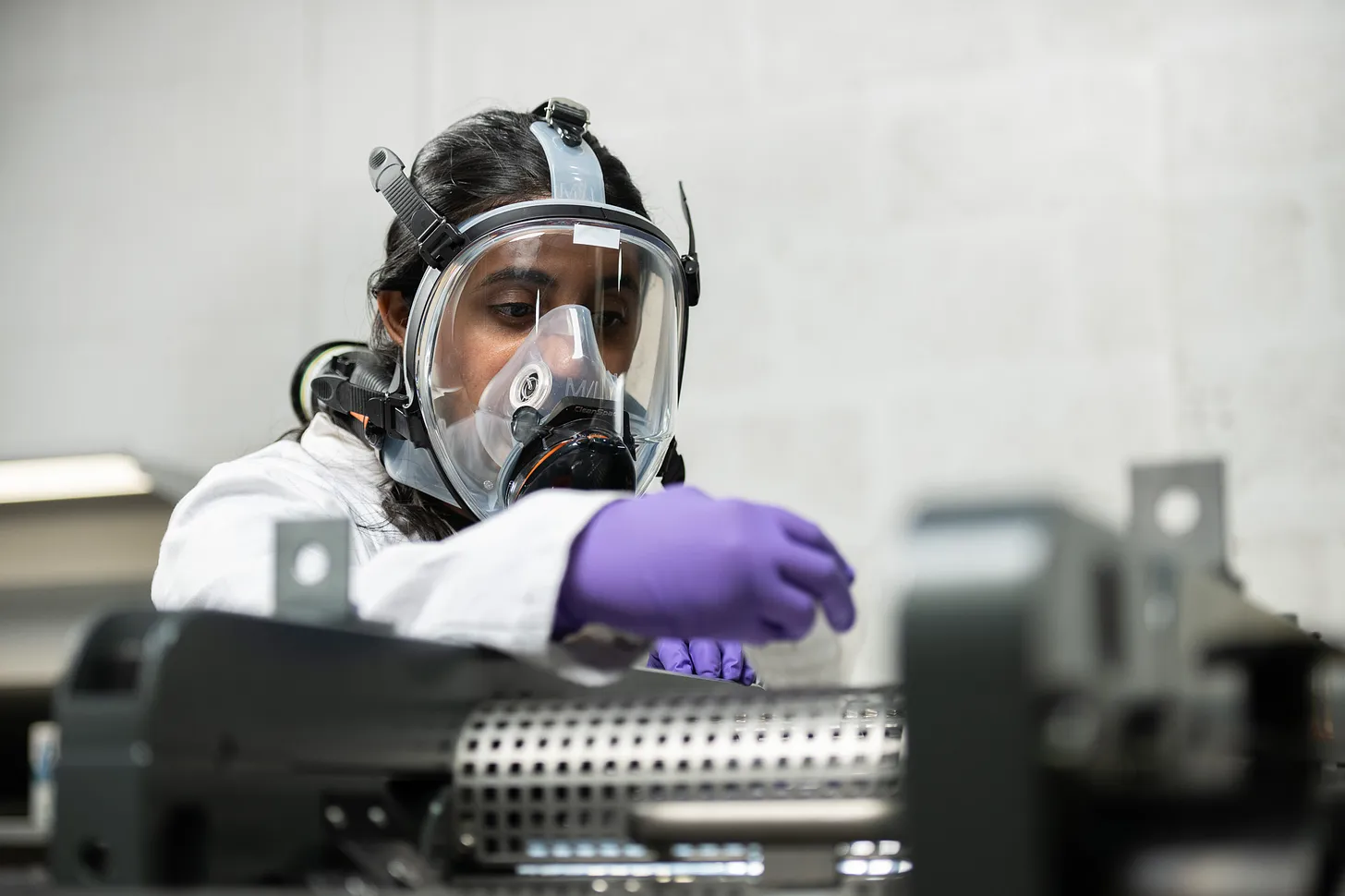
Anaphite has secured £1.4 million through the Innovate UK Investor Partnership Programme, money that will be used to apply its Dry Coating Precursor, or DCP, process to lithium iron phosphate cathodes and graphite anodes.
The round is a Series A follow on. Half comes as a grant from Innovate UK’s clean energy and climate technologies competition and the other half is matched venture funding from climate focused investors Elbow Beach and World Fund. For a company focused on process engineering rather than a branded end product, this blend of public and private capital interesting. While equity investors know the value of clean battery tech, it’s clear that governments want in on the show as well.
“We’re thrilled to have secured this grant support from Innovate UK and the matching investment from Elbow Beach, World Fund and other Anaphite investors,” said Anaphite’s CEO Joe Stevenson. “This enables us to attack one of the toughest technical challenges in dry coating – successfully manufacturing LFP electrodes.”

Lithium ferrophosphate (LFP) is now all the rage in battery technology. It holds less energy per kilogram than high nickel manganese cobalt oxides (NMC), but recent progress means it is good enough for many mass market electric vehicles. Analysts expect LFP to make up more than half of all demand by 2030. The problem is cost and energy use. Making LFP cathodes currently takes more than twice as much energy per kilowatt hour of cells as comparable NMC lines. Much of that comes from the mixing and coating steps, which together make up around a third of the total energy use and cost of a cell factory.
Dry coating is one of the few ways to fix that. Skipping the liquid solvent step cuts energy use, shortens the line, and can lower emissions by about thirty percent. The hard part is doing this at scale with very fine powders that have a large surface area. Anaphite’s DCP process has already worked with NMC cathodes.
For cell makers and defence manufacturers, the value is clear. With a bit of tweaking, they get a high throughput, dry coating route for LFP cathodes and graphite anodes to lower operating costs, cut the carbon footprint of each pack, and reduce sensitivity to rising energy prices. It would also support the UK government’s advanced manufacturing plan, which identifies batteries and automotive as priority sectors, and it would feed directly into the build out of battery energy storage systems across the grid.
Anaphite plans to use roll to roll coating methods, build full cells, and test first cycle efficiency and long term cycle life. If those techniques hold up, the company will be in a stronger position to support large cell makers and global automotive groups that are under pressure to bring costs down while meeting stricter climate rules.
Process technologies that can make local plants cheaper to run and more competitive are now part of industrial security, not just climate policy. If Anaphite can show that dry coated LFP and graphite can be produced at scale in Britain, it will give both domestic and European manufacturers another concrete option as they rebuild supply chains for an electric and storage heavy energy system.