

Auterion demonstrates a multi-manufacturer drone strike under real conditions
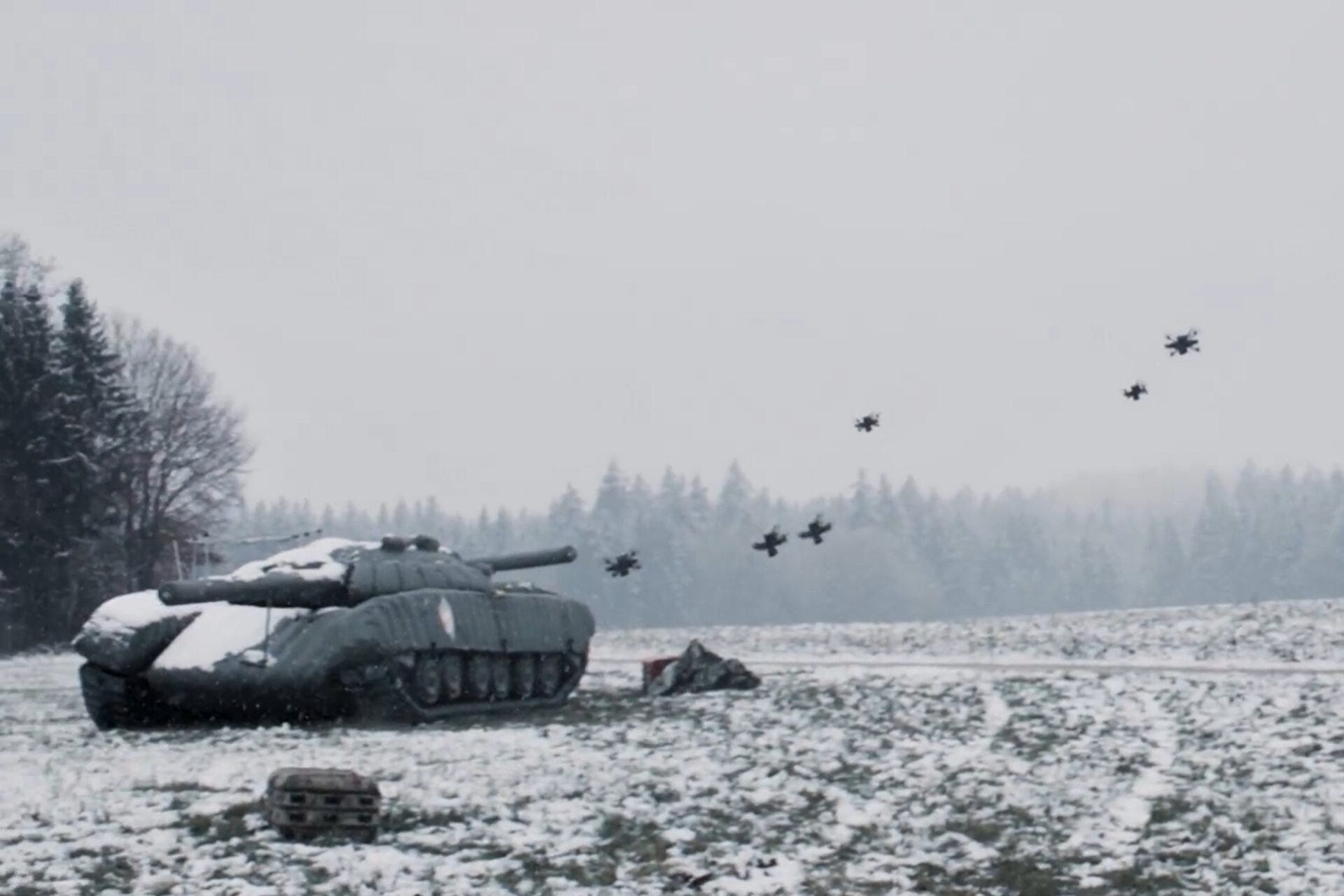
Munich-based Auterion ran what it calls the world’s first multi-manufacturer swarm strike with both FPV munitions and fixed-wing drones working as a single formation under human supervision. Eight short-range First-Person View (FPV) drones and two fixed-wing platforms ran a full sequence together, including a coordinated, vision-guided attack. Human operators set the target while the swarm engine, Nemyx, handled timing and target allocation across mixed devices.
“This is the moment when swarming autonomy stops being a concept and becomes an operational reality,” said Lorenz Meier, Auterion. “For the first time, FPVs and fixed-wing loitering munitions from different manufacturers flew, hit, and finished together as a unified swarm. This is the architecture that future warfare will be built on.”
FPV drones in Ukraine are still mostly flown one by one, over Starlink links, by lone operators. This demo shows the next step: FPVs from several vendors acting on shared mission logic rather than on a collection of joystick feeds. That is the only way to scale from dozens of sorties a day to hundreds without burning out operators and filling the sky with mid-air collisions.
Nemyx uses AuterionOS and Skynode avionics, which are now being shipped in tens of thousands of units, including under a Pentagon contract to deliver 33,000 strike kits for Ukraine. Any drone that runs that stack can join the swarm with a software upgrade. In theory, that lets European and US primes, small manufacturers, and local integrators plug into the same ecosystem without one company owning the whole stack. In practice, whoever owns the software update channel and data flows has real leverage. Auterion is open about its goal here: a common operating system for allied unmanned systems.
True multi-manufacturer interoperability is hard, and the industry has a long history of promising open ecosystems that quietly drift into de facto lock-in. NATO has also been here before with various “common” data links and standards that fracture under real procurement cycles and national industrial interests. Swarm behavior adds its own risks. However, if systems like these can actively work together even relatively seamlessly, the possibilities for future drone swarm development are definitely interesting.