Friday 2 January, 2026
Resilience Media
  • About
  • News
  • Resilience Conference
  • Guest Posts
    • Author a Post
  • Subscribe
No Result
View All Result
  • About
  • News
  • Resilience Conference
  • Guest Posts
    • Author a Post
  • Subscribe
No Result
View All Result
Resilience Media
No Result
View All Result

Helsing unveils AI-powered acoustic detection system to ward off naval threats

Resilience MediabyResilience Media
May 13, 2025
in News, Startups
Image courtesy of Helsing

Image courtesy of Helsing

Share on Linkedin

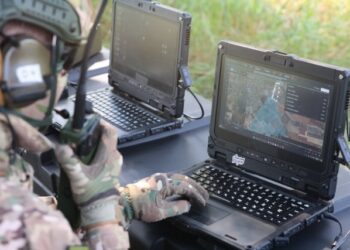
German defence AI developer Helsing has introduced a novel acoustic detection system to autonomously track adversary ships and submarines with an accuracy surpassing any previously developed detection technology.

You Might Also Like

Space Forge launches a 1,000°C orbital furnace to make cleaner semiconductor crystals in microgravity

Orqa CEO Srdjan Kovacevic on distributed drone manufacturing and why small factories matter

GPS: the first front in electronic warfare

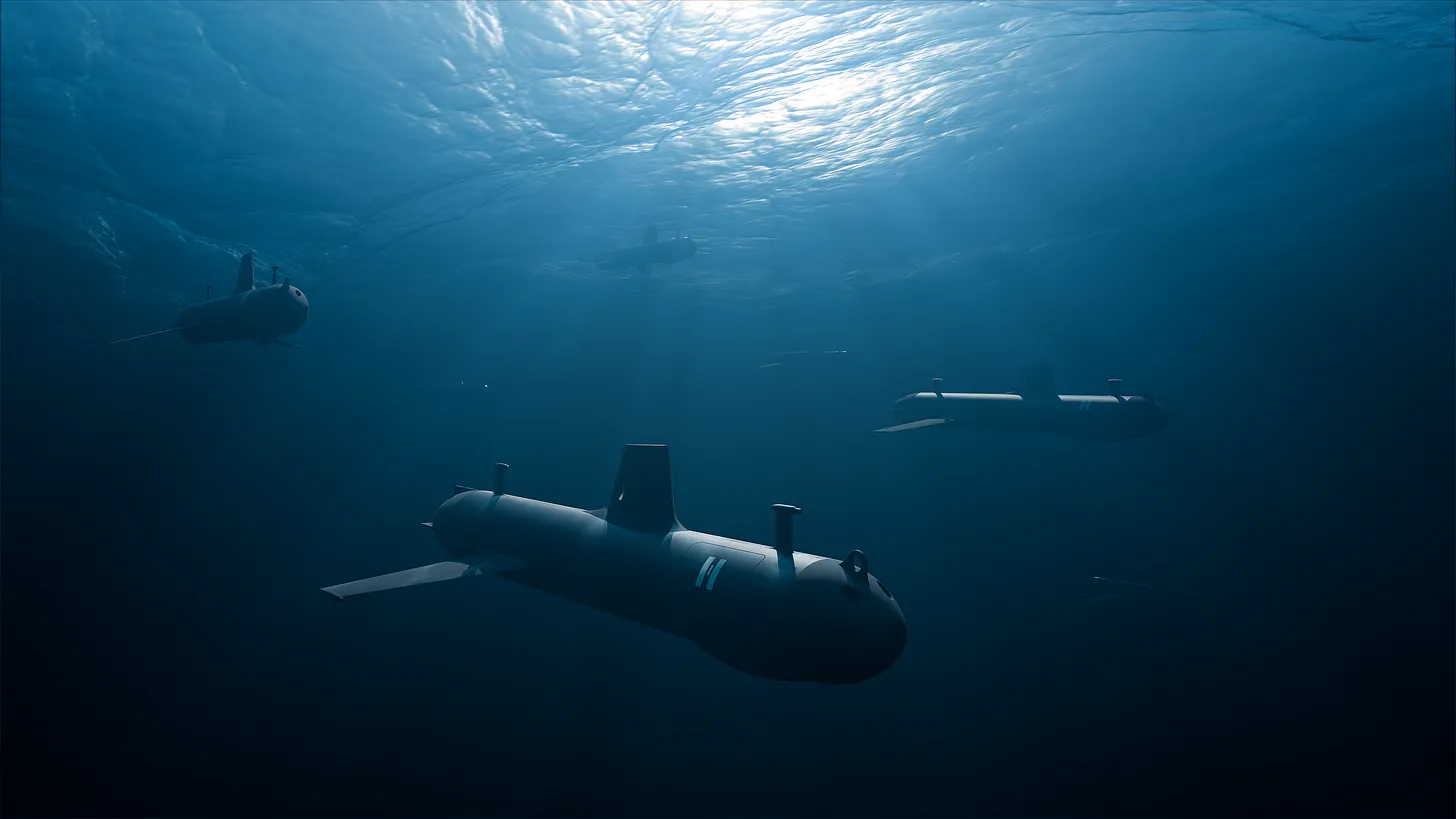
The AI system, called Lura, will analyse measurements obtained by sensors placed on a fleet of brand-new underwater drones also developed by Helsing.

The autonomous gliders, called SG-1 Fathom, can roam the contested regions of the world’s oceans in large numbers, using their sensors to listen for approaching threats. Helsing said in a statement that Lura will hear signals ten times fainter than any previously developed AI-based detection system and will detect threats forty times faster than human operators.

“We must harness new technologies to keep pace with the threats against our critical infrastructure, national waters, and way of life,” Gundbert Scherf, Helsing’s co-founder and co-CEO, said in the statement. “Deploying AI to the edge of underwater constellations will illuminate the oceans and deter our adversaries for a strong Europe.”

The technology at the heart of the Lura system is akin to large language models such as ChatGPT. Lura, however, detects and classifies noise produced by marine vessels and localises the source of those acoustic signatures.

A fleet of hundreds of SG-1 Fathom gliders can be tasked and monitored by a single human operator, reducing the cost of maritime surveillance to about one tenth of that required to run crewed ship and submarine patrols.

The mass-produceable SG-1 Fathoms are “cheaper than any other gliders available in the market,” according to Helsing, and capable of roaming the seas for up to three months at a time.

“To protect ourselves from increasing threats, especially underwater, we must do defence differently,” Amelia Gould, general manager at Helsing Maritime, said in the statement. “At Helsing, we know how important it is to learn and adapt from each mission.”

While the gliders roam the oceans, the data they gather are sent to edge computers on shore in real time for processing and classification.

Helsing showed off the technology during a demonstration at HM Naval Base Portsmouth last week, hailing the system as a “new approach” to underwater battlespace and the beginning of the digitalisation of the world’s oceans.


Tags: Amelia GouldGermanyGundbert ScherfHelsing
Previous Post

Germany acquires loitering munitions as drone doctrine evolves

Next Post

ARX Robotics brings combat-tested UGV to British soil

Resilience Media

Resilience Media

Start Ups. Security. Defense.

Related News

Space Forge launches a 1,000°C orbital furnace to make cleaner semiconductor crystals in microgravity

byJohn Biggs
December 31, 2025

Cardiff-based Space Forge has announced it has put a microwave-sized manufacturing payload into orbit, including a 1,000°C furnace for smelting...

Orqa CEO Srdjan Kovacevic on distributed drone manufacturing and why small factories matter

byJohn Biggs
December 31, 2025

Resilience spoke with Orqa CEO Srdjan Kovacevic about a shift happening in defense manufacturing: distributed manufacturing. Instead of building drones...

GPS Satellite

GPS: the first front in electronic warfare

byPaddy Stephens
December 31, 2025

From the earliest weeks of Russia’s invasion of Ukraine, Ukraine’s power plants have been pummeled by projectiles from its adversary....

view of Earth and satellite

Space is becoming the next battleground for securing defence data

byCarly Page
December 30, 2025

For defence organisations trying to keep command and control working, the challenge is no longer a lack of data. It’s...

Orqa will distribute drone manufacturing globally, reducing dependence on commodity hardware

byJohn Biggs
December 23, 2025

Orqa, a Croatian FPV drone company, has announced it is starting a Global Manufacturing Program meant to raise annual drone...

Frankenburg demonstrates first “hard-kill” intercept between rocket and Shahed-style drone

byJohn Biggs
December 23, 2025

Rocket maker Frankenburg Technologies reported that it conducted "kill-chain hard-kill intercept against a fast-moving aerial target" on 12 December 2026...

Resilience Media’s top stories from 2025

byResilience Media
December 22, 2025

In 2025, we reported on the complexities of defence, technology, and geopolitics. Our journalism came to readers from conference halls,...

Photo credit Stark Defence

Stark and TDW accelerate loitering munition readiness with successful live warhead test

byLeslie Hitchcock
December 22, 2025

Stark and TDW have successfully conducted the first warhead live firing using Stark's loitering munition, according to join statements posted...

Load More
Next Post

ARX Robotics brings combat-tested UGV to British soil

Image courtesy of ICEYE

Finnish satellite maker ICEYE announces plans to scale up production to meet defence needs

Most viewed

Scout Ventures GP Brad Harrison talks about funding the future of defence

UK launches undersea surveillance programme to counter growing Russian threat

Skana wants to shore up coastal defence with amphibious vessel for shallow waters

Welcome to the greyzone of warfare in space

The Long Read: How Helsing Sees the World

Exein, the embedded security startup, nabs €100M at ~€700M valuation

Resilience Media is an independent publication covering the future of defence, security, and resilience. Our reporting focuses on emerging technologies, strategic threats, and the growing role of startups and investors in the defence of democracy.

  • About
  • News
  • Resilence Conference
  • Guest Posts
  • Subscribe
  • Privacy Policy
  • Terms & Conditions

© 2025 Resilience Media

No Result
View All Result
  • About
  • News
  • Resilence Conference
  • Guest Posts
  • Subscribe
  • Privacy Policy
  • Terms & Conditions

© 2025 Resilience Media

This website uses cookies. By continuing to use this website you are giving consent to cookies being used. Visit our Privacy and Cookie Policy.