After years of sitting out of startup funding boom, defence tech has come in from the cold. Investors spurred by geopolitical events, changing priorities for how countries are spending money, and a growing track record of success, now want to talk to startups that are building for defence and national resilience. In Europe alone we are on track to see some $1.5 billion put into the space this year.
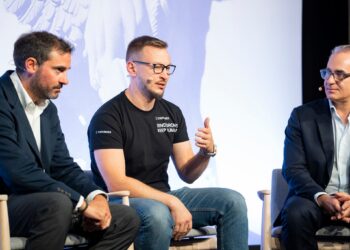
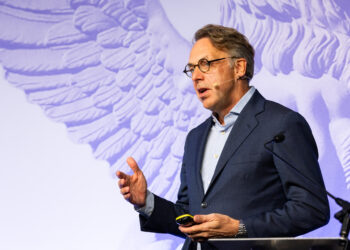
What has changed, and what still needs attention? Three investors putting significant money into the space discussed this and more at the recent Resilience Conference.
‘Defence first’
When it comes to defence VC, investors are falling into two major categories: those who are “defence first” putting defence tech front and centre in their investments; and those who are not.
The latter might instead be focused on startups building dual-use products (eg, defence being one endpoint; enterprise being another); or they might be new to the field and defence is one of several other categories they are targeting.
The second category is much larger and growing fast — not least because it’s a “cute” way to get more investors used to investing in more defence tech, Lital Leshem, the co-founder and managing partner of the Israeli Protego Ventures noted. But alongside that, we are now seeing the emergence of more “defence first” funds, SmartCap CEO Sile Pettai said.
Her firm is helping to build them. Based out of Estonia, SmartCap is both a direct investor — deploying €500 million across three different funds related to general tech, green tech and defence tech (€100 million) — and an LP in a number of other funds that are prioritising defence tech investments. The current list includes Darkstar and Plural, among several other defence VCs in the market, she said.
She made a call for more LPs to come into the fold. “Defence could rise in Europe,” Pettai noted, but it needs more than just money, it needs “first believers… diversifying the capital supply.”
Companies like Helsing, Stark and Auterion are these days attracting major names in VC like General Catalyst, Sequoia and Bessemer, but that is a relatively new development. It was as recently as 2019 that Nicholas Nelson, a general partner at Archangel, said that an essay he wrote about building defence tech “unicorns” led to him getting “some my first and only hate mail.”
Charters say one thing, world events say another
Leshem of Protego Ventures, noted that one of the gating factors for seeing more VCs embrace defence tech has been regulations.
These are playing out on different fronts. One is within investors themselves, which typically hold charters with their LPs that spell out what they can and cannot invest in — whether it’s prohibiting anything with a defence purpose outright, or prohibiting specific kinds of defence tech, such as kinetic hardware or software used essentially for “offence” rather than defence.
“It’s not easy to scale a defence tech company,” because of this, she said. For many of those who have been investing for years, this way of thinking has been the incumbent, default position. “I was always told that VC and defence tech are two parallel lines and are never doomed to meet.”
That has not been helped by the fact that the economics of defence investing have typically been challenging for VCs.
Those doing the buying — ministries of defence — have traditionally had long sales cycles and many procurement hoops to jump through. That could also be constrained by the other kind of regulatory issue: governments in Europe have for years constrained how much and how GDP can be spent on defence, and that too has limited the speed and volume of procurement.
However, she noted, geopolitics have shifted things.
“October 7th changed it for us,” she said, referring to the the Hamas-led attacks in Israel. These focused many people to tap and invest in defence tech. Something similar has played out in Europe as a result of the war in Ukraine.
Some are fly-by investors; others are in for the long haul
A big question that looms over any boom in tech is how much is hype, and how much is sustainable growth. What is a sound investment?
Nelson knows defence is not immune to having its own “hype cycle” — partly because of how intertwined defence tech has been with AI — but feels that as long as you are aware of that, it can be managed and that those serious about the space need to make bets on companies that secure defence tech as a category for the long haul.
The way to do that, he continued, is by investing in startups that they believe could become foundational companies.
“There are going to be people who are here early on,” he said. Some will stay on and some will move to the next bubble. “I’ve seen climate funds and crypto and NFT funds who are now suddenly defence-curious at best,” he said. “That’s great to see, but they will move on to the next hype cycle afterwards. It’s really about building up a long-term ecosystem.”
Leshem believes that defence tech is less of a bubble category than you might think.
“People say ‘trend,’ they say ‘hype,’” she said, “but I think those are slang words more fitted to fashion, not defence tech… it’s pretty obvious what is the future.”
Attitude of LPs towards defence-first funds
Is Pettai at SmartCap — an investor actively looking to invest in more defence VCs — the exception or the rule in Europe? Leshem said that her fund, with its focus on Israeli startups, has previously counted “most” of its LPs from US LPs — family offices, high net-worth individuals and other VCs — but that has recently started to shift with more LPs now from Europe, too.
“We do see a lot of interest coming out of Europe to acquire Israeli innovation, and to invest in VCs with the expertise of a dedicated defence tech fund.” She said it took 2 months for Protego to raise $50 million for its next fund, and it aims to close that at $150 million by the end of next year.
Nelson noted that attitudes differ by a lot between geographies when it comes to LPs and what they are expecting when they back VCs that are investing in defence tech.
There are currently 36 different funds that either wholly or predominantly focus on defence and dual use, he said.
“Now, here’s the caveat. Dual use in the United States can mean 90% defence, and 10% commercial, or the inverse,” he said. But when European funds or investors talk about defence, “they want to see majority commercial. And Hey, you sold a widget one time to the MoD? Go with God, you are now dual use!”
He said that this approach, in practice, is “nonsensical from our perspective.” It speaks to the idiosyncrasies, the inconsistencies, between markets, he added.
Pettai said that dual-use has been a sound way to work with most LPs and she distinguishes SmartCap from most of its peers in that regard.
“We were not on the same page with the largest institutional investors in Europe,” she said, describing the latter as being in a “difficult position because they had to make hard choices” between defence and non-defence and dual-use investing. “It tends to be either/or.”
AI bubble
Nelson closed off the conversation with a return to the role AI is playing in defence tech. He noted that while his firm is investing a lot in AI-based solutions, it’s doing so while also trying to keep some balance.
Too much focus on defence being “all AI”, he said. Nelson believes that there will still be a lot of other “traditional” technology out there worth funding and seeing through.
“Hardware is still a key component” of the portfolio, he said, adding that deep tech and tech that looks “if you squint” like B2B SaaS. “Our portfolio is selection of [all] that and balanced out.”