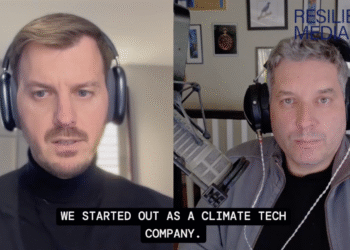
Vitaly Golomb thinks about the future in straight lines, not slogans. He grew up in Silicon Valley, has roots in Odesa, and now runs both an investment bank and an early stage fund focused on robotics and embodied AI. That blend, finance and frontier tech, gives him a clear view of the world Ukraine is fighting to survive, and the world we are all about to enter.
In our conversation, he cut through the noise around dual use tech. Most of what people call dual use will not survive the day after the war, he said.
“There’s a lot of ‘dual use’ technologies that people are looking at and there are a lot of funds forming around that,” he said. “I have a slightly different view, probably a little bit maybe controversial. I think the day after the war is over, a lot of these dual use technology companies are going to discover that they are single use.”
He went on to explain that companies that doubled down on military robotics would eventually fail because their market dried up overnight.
He said that the real long-term value sits in sectors with structural demand: industrial automation, medical robotics, autonomous driving, assistive systems for aging populations. These are the machines that factories, hospitals, and cities will need for decades, not just during a crisis. They are also the companies that can scale fast enough to matter for a venture fund that cannot wait ten years for science projects to mature.
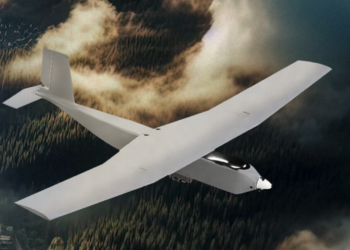
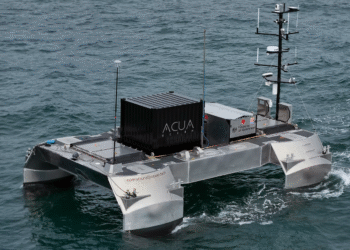
That does not mean he ignores defense. The personal stake is obvious. Ukraine is doing the work NATO was built to do, he said, holding back a colonial power at Europe’s edge. But from a pure investment perspective, defense startups face concentration risk. A single customer, even a large one, does not make a healthy business. Profit limits, procurement cycles, and narrow markets slow the path to venture scale. It can work for private equity, he said, but venture requires companies that can become billion-dollar businesses selling into broad markets. A drone makes sense today. Tens of thousands of hospitals buying service robots make sense for the next fifty years.
His larger concern is not the robots. It is the people behind them. Knowledge work is evaporating. His own bank has zero junior analysts. AI does the work faster and without complaint. The same thing is hitting consulting, engineering, and white-collar jobs that were once considered safe. College graduates will walk into a labor market with fewer rungs on the ladder and far higher expectations. If we do not raise the level of education and technical literacy quickly, we risk a generation pushed to the margins.
And history tells us what happens to displaced workers. They get angry. They look for scapegoats. They become vulnerable to movements that promise to name an enemy and restore a past that no longer exists. His upcoming book, The Grievance Economy, traces this path and warns where it leads. He believes we are entering a hard cycle, a “winter” in the generational turning, where economic pressure and political instability feed each other until a new system emerges.
Golumb is clear-eyed about the risk and still optimistic about the work. He is building companies that solve real problems and writing about the forces shaping the decade ahead. The grievances are rising, he said, but the future is still something we can build if we understand what is coming.