Cambridge-based Nu Quantum — which develops photonic technology used in quantum computing architectures — has secured a landmark $60 million in Series A funding. The startup said this is the largest round ever raised by a “pure-play” quantum networking company, and the biggest quantum Series A in the UK to date.
National Grid Partners, the investment arm of the National Grid, led the round, with participation from new investors Gresham House Ventures and Morpheus Ventures, and existing investors including Amadeus Capital Partners, IQ Capital, Ahren Capital, Cambridge Enterprise Ventures, East Innovate, NSSIF, and Sumitomo (Presidio Ventures). The round was first reported to be in the works by The Telegraph earlier this year.
Nu Quantum said it will be using the funding to continue building its distributed quantum computing platform, which is based on interconnecting quantum processors working in a unified, scalable fabric. As with a lot of the technology being developed for quantum computing, Nu Quantum’s focus is on functionality that will be necessary in a future where quantum computing will have made a breakthrough with error correction and moved beyond labs and into wider environments and broader use cases. Nu Quantum’s architecture, which it terms the “Entanglement Fabric”, could form the backbone of future quantum data centres, it says, enabling fault-tolerant machines with performance unreachable by any single quantum processor.
Until now, the global quantum computing industry has concentrated mainly on improving individual quantum processors in isolation. While such efforts remain vital, Nu Quantum argues they are insufficient to reach the scale required for meaningful, real-world applications.
“Quantum computers have the potential to solve problems that will always be beyond the reach of any classical supercomputer,” the company states. To unlock that potential, a significant scaling up, potentially by orders of magnitude, is required.
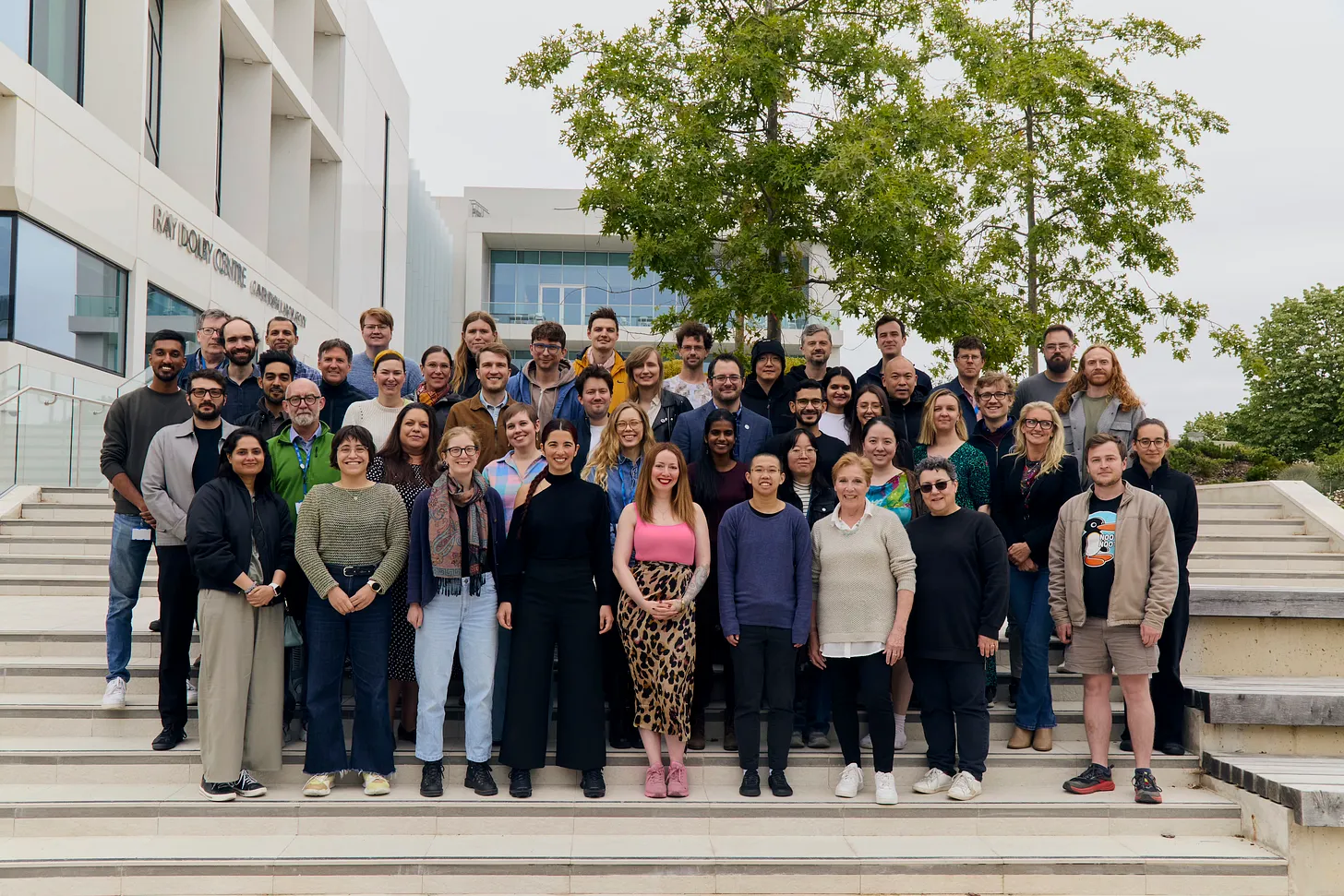
Dr Carmen Palacios-Berraquero, Nu Quantum’s founder and chief executive, said: “When we launched seven years ago, very few were thinking about networked or distributed quantum computing as a strategy for scaling, but we saw it as one of the most urgent and challenging outstanding problems in the industry, and set out to solve it.”
She added that the company had “created a culture defined by fearless innovation, and fuelled by collaboration and diversity … This investment validates our vision and the maturity of our solution as the path to scaling.”
The participation of the UK Government’s National Security Strategic Investment Fund (NSSIF) will not go unnoticed in defence circles.
As the government’s vehicle for backing technologies deemed strategically important to national security, NSSIF’s support points to how quantum networking is being viewed as a capability of sovereign interest. In other words, Whitehall’s view is that distributed quantum systems could underpin future secure communications architectures and next-generation cryptographic resilience.
Investment from National Grid Partners is also notable because it points to how quantum networking is being eyed beyond pure tech-venture circles.
Data centres, especially in the age of AI, have created a lot of challenges — but also opportunities, depending how you look at it — in areas like energy consumption and infrastructure development. Quantum computing could leapfrog the approach being taken by data-centre-hungry AI hyperscalers, or it could compound the problem even more. In either scenario, power infrastructure operators — namely national grid (lowercase) providers — might have a big role to play in either serving that beast, or taking on the provisioning themselves. Hence this investment.
“We are closer to quantum computing having an impact on businesses and lives than many people think,” said Steve Smith, chief strategy and regulation officer at National Grid, in a statement. “Nu Quantum is at the forefront of bringing this powerful technology closer to market and using it to solve real-world challenges today.”
The funding will accelerate development of Nu Quantum’s roadmap, building on recent milestones including its 2024 Qubit-Photon Interface and 2025 Quantum Networking Unit, the company said. This will include more work on distributed quantum error correction and partnerships with quantum-processing-unit (QPU) vendors. It also wants to expand beyond the UK to Europe and the US.
Quantum computing has long been heralded as a potential game-changer for cryptography, code-breaking, and secure communications. A scalable, networked quantum infrastructure could accelerate the transition from lab-scale experiments to real-world capability. By knitting together quantum processors via high-fidelity photonic links, Nu Quantum’s approach may deliver the kind of robust, fault-tolerant architecture essential for sensitive, high-stakes applications.
As quantum computing edges closer to practical deployment, funding rounds of this magnitude — and from investors in sectors such as government, energy, and infrastructure — underscore the growing recognition that scalable quantum networks, not merely single-chip breakthroughs.