Thursday 19 February, 2026
[email protected]
Resilience Media
  • About
  • News
  • Resilience Conference
    • Resilience Conference Warsaw 2026
    • Resilience Conference Copenhagen 2026
    • Resilience Conference London 2026
  • Guest Posts
    • Author a Post
  • Subscribe
No Result
View All Result
  • About
  • News
  • Resilience Conference
    • Resilience Conference Warsaw 2026
    • Resilience Conference Copenhagen 2026
    • Resilience Conference London 2026
  • Guest Posts
    • Author a Post
  • Subscribe
No Result
View All Result
Resilience Media
No Result
View All Result

Stark buys a startup to boost its manufacturing muscle

AeroMass Technologies had quietly built out a factory network to improve just-in-time component making for defence customers. Now Stark hopes to use it to speed up turnaround for itself

Ingrid LundenbyIngrid Lunden
December 3, 2025
in News, Startups
Share on Linkedin

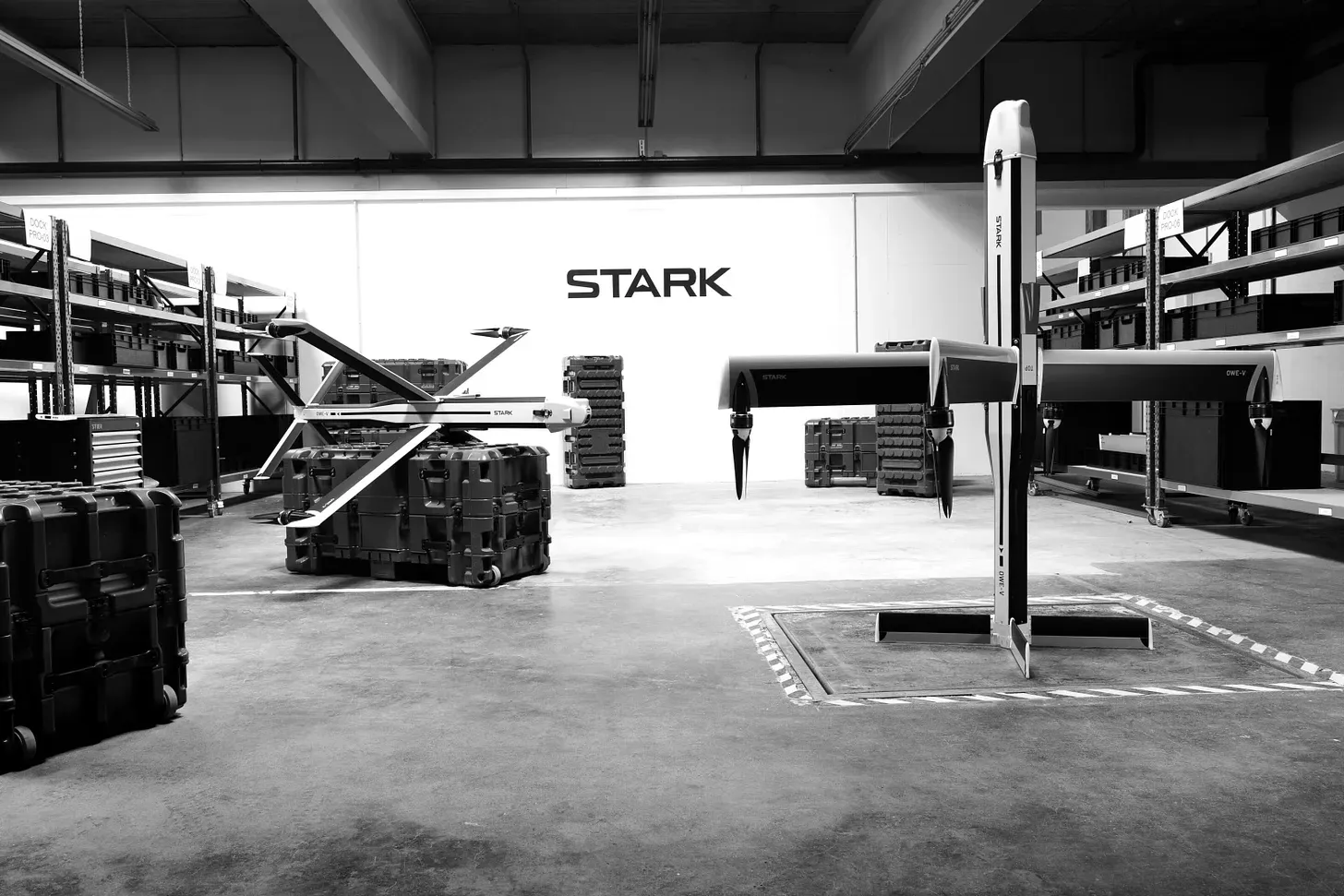
Weeks after officially opening its first ‘drone factory’ in the UK, German defence startup Stark — backed by the likes of NATO, In-Q-Tel and Sequoia — is making another move to lean into manufacturing. Today the drone maker announced the acquisition of AeroMass Technologies, a startup building supply chains for producing defence equipment. This is Stark’s second acquisition after buying autonomous flight navigation startup Pleno earlier this year.

You Might Also Like

Ukraine planning a national mobile carrier for military use

Biometric wearables company Aware gets $7.5 million program increase from the U.S. Army

Helsing’s second German Resilience factory is live

Financial terms of the deal have not been disclosed. Nor is it clear whether AMT had raised funding. A listing on the UK’s Companies House register notes that AMT was voluntarily dissolved earlier this year and we understand that in fact this deal closed more than a year ago, in November 2024, and winding up the UK business while keeping a US entity that was acquired was a condition of the deal.

AMT was founded in 2023, and its focus is building out production networks of existing manufacturers across the UK and Europe — not just those that have built components for older or next-generation products, but also those that have “traditionally specialised in consumer goods” the company said.

The idea here is to build a more resilient production process through outsourcing.

The top-level manufacturer — in this case Stark — reduces overhead costs from building new facilities itself; it can scale the scope of its manufacturing to meet whatever level of demand there is; and there is in theory a better relationship between manufacturing supply and demand: the output potential of existing factories that are often small businesses (supply) gets connected more efficiently with orders for parts that need to be made (demand).

AMT claims to have “validated” this model through projects with the UK’s Minister of Defence and other allied militaries.

Stark today has three manufacturing facilities: the new shop in Swindon, one in Germany and one in Ukraine. Going forward, it will be interesting to see if Stark builds more standalone factories or if it uses AMT’s network in place of that.

The acquisition in notable for a few other reasons:

— Stark wants to show it is serious. The company has hit the ground running in the UK, with the publicised opening of its factory coinciding with a showcase to groups of would-be buyers and users in the UK military. That approach has been carried out in its AMT acquisition, too. The company notes in its announcement that it has “fully integrated” all of AMT’s systems into the STARK portfolio “for future projects.” And AMT co-founder James Earl has already taken on a position as Stark programme manager, where he will be scaling production both at the Swindon facility and further afield.

The companies did not disclose any details about customers or procurement orders.

— Earl has an interesting background that speaks to talent acquisition in defence tech startups. He trained with the Royal Air Force and initially had a military career as a helicopter pilot before moving into a variety of management, business development and sales roles across a range of civil next-generation transportation and aeronautics companies. These included a company that supplied services to Alphabet for its self-driving car efforts. Defence tech companies, especially those that have come out of technology roots, are hiring a lot of talent that gives them inroads into the defence industry and how it operates, and this is an example of that in action.

— Competition. One of Stark’s bigger startup rivals in the space of kinetic drones is Helsing. The latter company officially opened its first UK factory in Plymouth just days before Stark held a big event to inaugurate its large R&D and manufacturing space in Swindon. Helsing had a key partner in its Plymouth activities: Isembard, which itself provides services that are similar to what AMT was building, a platform for organising and manufacturing components and finished items across a distributed group of suppliers. You could see Stark’s acquisition as a one-up move on Helsing, bringing that kind of expertise in-house.

— On-demand is the name of the game. If legacy defence companies are typically slow to move in the procurement process, one advantage that startups can build in from the ground up is a more efficient, demand-based architecture that helps them get equipment to buyers faster.

“Stark was created to address the urgent need for a new approach to defence technology,” CTO Johannes Schaback said in a statement. “At the core of this new approach is an increased need for agility, in the way defence technology operates, in how it is deployed and in how it is manufactured. In acquiring AMT, we are leveraging not only their dynamic approach to production, but also their impressive manufacturing network, which will help to keep NATO safe.”

Stark’s first acquisition of Pleno was aimed at improving the flight navigation software used by its drones and other autonomous devices, particularly to help develop against signal jamming and building more swarm technologies. This latest deal will help Stark build out its physical business faster.

“At AMT we were obsessed with scaling fast, even if it meant at the expense of aesthetics. In our view, the only way to deliver the mass that modern warfare demands, is to put design for manufacturing at the centre of everything,” said Earl in a statement.

Stark itself is on a growth tear at the moment, which could mean potentially more funding for the startup coming soon on the back of the $62 million it raised earlier this year.

Tags: Stark
Previous Post

Is Taiwan’s power grid at a break point?

Next Post

InVeris announces fats Drone, an integrated, multi-party drone flight simulator

Ingrid Lunden

Ingrid Lunden

Ingrid is an editor and writer. Born in Moscow, brought up in the U.S. and now based out of London, from February 2012 to May 2025, she worked at leading technology publication TechCrunch, initially as a writer and eventually as one of TechCrunch’s managing editors, leading the company’s international editorial operation and working as part of TechCrunch’s senior leadership team. She speaks Russian, French and Spanish and takes a keen interest in the intersection of technology with geopolitics.

Related News

Ukraine planning a national mobile carrier for military use

Ukraine planning a national mobile carrier for military use

byJohn Biggs
February 18, 2026

Ukraine is moving to reduce one of its most critical battlefield vulnerabilities: dependence on a single commercial satellite provider for...

Biometric wearables company Aware gets $7.5 million program increase from the U.S. Army

Biometric wearables company Aware gets $7.5 million program increase from the U.S. Army

byJohn Biggs
February 17, 2026

According to a release by Atlanta-based Aware the company has received a $7.5 million program increase from the Army. The...

Helsing’s second German Resilience factory is live

Helsing’s second German Resilience factory is live

byJohn Biggs
February 17, 2026

Germany's Helsing has been showing how their "resilience factories" — facilities that are built in months rather than years and...

Hypersonica raises €23.3M to develop hypersonic missiles for Europe

Russian and Chinese hypersonic moves turn the heat up for NATO

byTom Pashby
February 17, 2026

The advent of hypersonic weapons – a broad category covering systems that travel at Mach 5+ including hypersonic boost glide...

SatVu lands £30M including NATO backing to scale thermal satellite constellation

SatVu lands £30M including NATO backing to scale thermal satellite constellation

byCarly Page
February 17, 2026

UK thermal imaging specialist SatVu has landed £30 million in new funding, including backing from the NATO Innovation Fund (NIF),...

Founder Stories: Viktoriia Yaremchuk, CEO of Farsight Vision

Farsight Vision’s €7.2M seed brings hope to the grafters

byFiona Alston
February 16, 2026

A fundraise this month for Ukrainian-Estonian startup Farsight Vision can serve as “motivation” for other value-adding startups from the region,...

Axon makes a strategic investment in The Fourth Law

Axon makes a strategic investment in The Fourth Law

byIngrid Lunden
February 16, 2026

One theme emerging across the defence tech ecosystem in Ukraine this year is an increasing number of international partnerships for...

Terra bags $22M more to build out Africa’s first defence prime

Terra bags $22M more to build out Africa’s first defence prime

byIngrid Lunden
February 16, 2026

Terra Industries, the Nigerian startup that has the ambition to become the first defence tech prime in Africa, has raised...

Load More
Next Post
InVeris announces fats Drone, an integrated, multi-party drone flight simulator

InVeris announces fats Drone, an integrated, multi-party drone flight simulator

Sky Spy snaps up $1.6M to expand in next-generation signal intelligence

Sky Spy snaps up $1.6M to expand in next-generation signal intelligence

Most viewed

InVeris announces fats Drone, an integrated, multi-party drone flight simulator

Twentyfour Industries emerges from stealth with $11.8M for mass-produced drones

Senai exits stealth to help governments harness online video intelligence

Harmattan AI raises $200M at a $1.4B valuation from Dassault

Palantir and Ukraine’s Brave1 have built a new AI “Dataroom”

Frankenburg has raised up to $50M at a $400M valuation, say sources

Resilience Media is an independent publication covering the future of defence, security, and resilience. Our reporting focuses on emerging technologies, strategic threats, and the growing role of startups and investors in the defence of democracy.

  • About
  • News
  • Resilence Conference
    • Resilience Conference Copenhagen 2026
    • Resilience Conference Warsaw 2026
    • Resilience Conference 2026
  • Guest Posts
  • Subscribe
  • Privacy Policy
  • Terms & Conditions

© 2026 Resilience Media

No Result
View All Result
  • About
  • News
  • Resilence Conference
    • Resilience Conference Copenhagen 2026
    • Resilience Conference Warsaw 2026
    • Resilience Conference 2026
  • Guest Posts
  • Subscribe
  • Privacy Policy
  • Terms & Conditions

© 2026 Resilience Media

This website uses cookies. By continuing to use this website you are giving consent to cookies being used. Visit our Privacy and Cookie Policy.