

The Weekend Read: After leading Sweden into NATO, Tobias Billström joins startup Nordic Air Defence
Resilience Media contributor Thomas Macaulay recently sat down over video with Tobias Billström, the newly appointed director of strategy and government affairs for Nordic Air Defence. The conversation ranged from Billström’s time in the Swedish government — most recently as Foreign Minister, where he led the country’s admission into NATO, his commitment to Ukraine, and his move into the private sector.
An excerpt is below, which you can continue reading by following the link to the full piece. Have a good weekend and we’ll see you again next week.
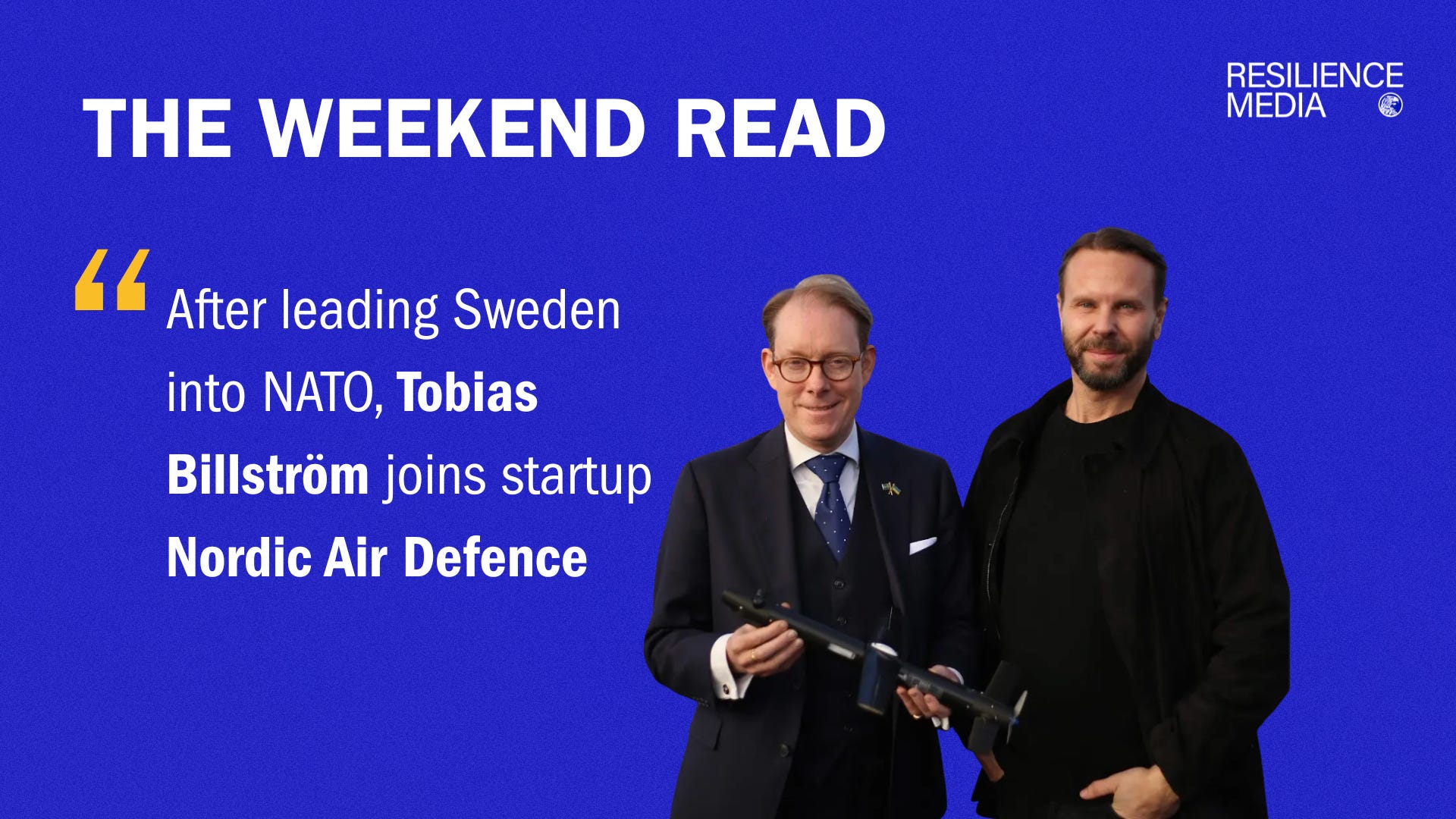
Just shy of two years after steering Sweden’s accession into NATO, Tobias Billström has taken a turn into the private sector. The country’s former foreign minister is the new director of strategy and government affairs for Nordic Air Defence (NAD), the Stockholm-based startup building drone interceptor technology.
Billström said his move to NAD underscores what he believes will be the next chapter for Sweden in defence. In short, NATO membership will open doors for NAD as well as other suppliers to develop and build more defence tech, and to sell that beyond the Swedish market.
“Joining NATO means that companies in Sweden will be able to act within the framework of Sweden being an ally — a full military ally,” Billström told Resilience Media on a video call.
Sweden joining NATO, and Billström joining NAD, are both unfolding at a key geopolitical moment in Western Europe.
Countries see Russia’s invasion of Ukraine as both a specific sovereignty threat in one country as well as an existential crisis for Europe overall. And it points not just to who and what the adversary is, but also how warfare is evolving. All of this is spurring increased activity in defence and defence tech across Europe and beyond.
Yet the developments also come at what is still a pretty nascent moment for Sweden’s defence industry.
One of the biggest names in tech in the country, Spotify founder Daniel Ek, is heavily investing in military technology. But that focus has largely been trained on funding Germany-based Helsing – currently the largest defence-tech startup in Europe with a €13 billion+ valuation.
The Swedish ecosystem is at a very different stage. NAD’s modest funding – €4.4 million in pre-seed investment, led by Inflection and concluded in July 2025 (per PitchBook data) – is actually the largest publicly disclosed raise in any Swedish defence-technology startup to date.
Billström is nonetheless bullish about his country’s innovation edge, arguing that its technical capabilities were a major attraction to NATO.
“[NATO allies] know that we bring well-equipped, well-trained troops,” he said. “We have capabilities in all five domains of NATO — land, sea, air, cyber, space. We even have our own space base, the Esrange, high up north, which means that we can launch satellites from our own territory.”
Sweden’s NATO membership, he added, will give NAD access to new channels to market that it didn’t have previously, including collaborations with DIANA, NATO’s accelerator for dual-use technologies, and new testbeds.
“[This] is one of the reasons why we joined in the first place,” he added. “Being part of this vast security network enables Sweden to become a security provider.”
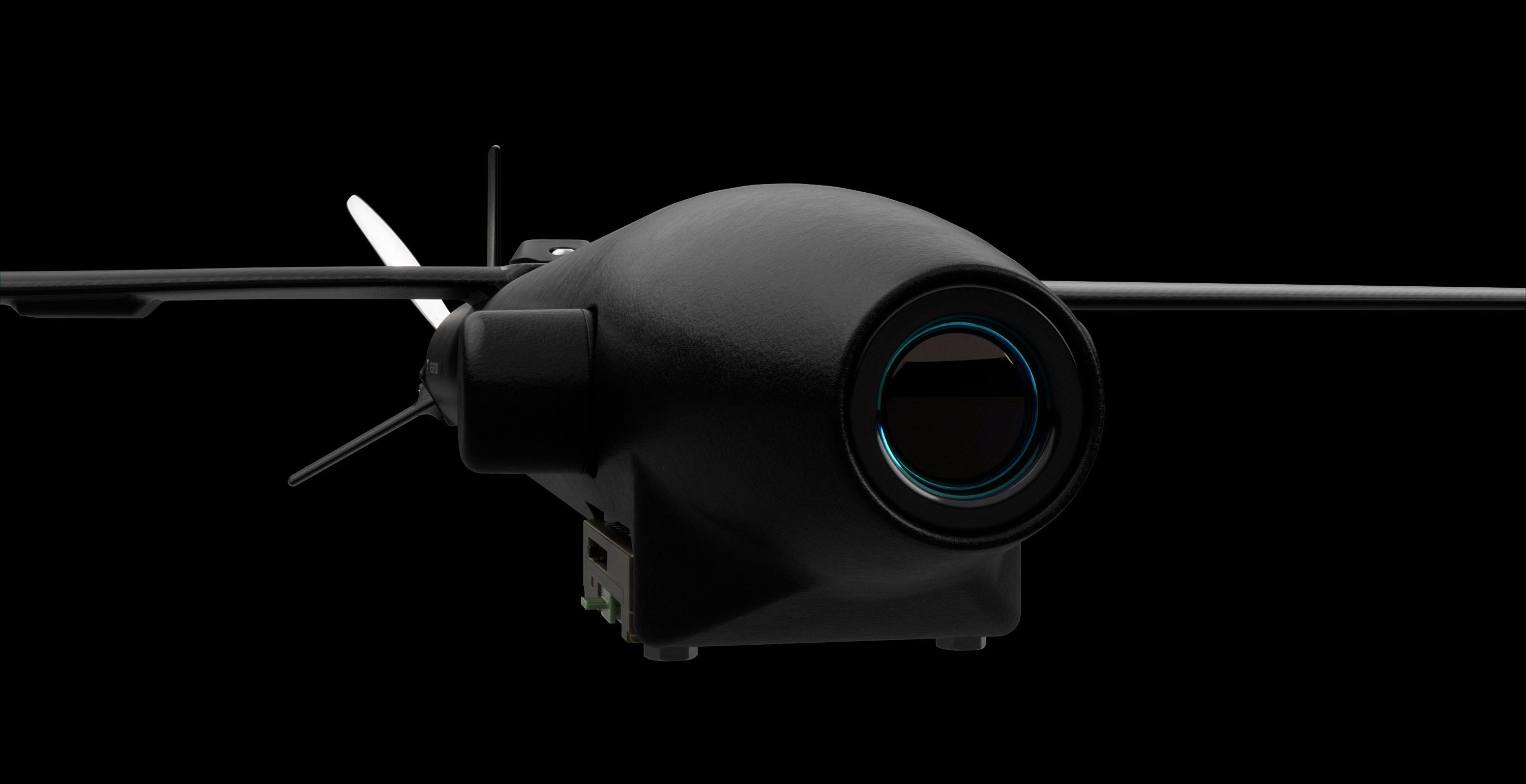
NAD’s flagship security product is the Kreuger 100XR, a foot-long, missile-shaped drone interceptor with an optional warhead. The system’s intercept range is billed as more than 5km.
NAD has also developed an embedded AI that enables “fire-and-forget” operations with autonomous detection, classification, and tracking.
Other features include a thermal infrared seeker, continuous ground control in radio frequency-stable environments, and a radio-silent autonomous mode.
Like many startups in the sector, NAD is focusing on interoperability, which gives smaller players a chance to both compete with larger primes and potentially collaborate with them.
NAD is ticking that box with “plug-and-play” integration, recently showcased in a collaboration with Volvo Defence. Together, the pair developed the Vipro, which mounts the Kreuger 100XR onto Volvo’s tactical trucks. Vipro is slated for operational introduction in 2026.
A key selling point for the Kreuger is its low production cost. NAD claims it is 10 times cheaper to produce per unit than conventional anti-drone interceptors and missiles. The startup credits the savings to replacing hardware in drone interceptors with software. Billström says the shift supports mass manufacturing in the EU.
“As we can see throughout the European Union at the moment, when it comes to defence procurement, you have two challenges,” Billström said. “One is the ability to scale up to produce in volume, and the second is that you have to produce things that are cost-efficient. These two are, of course, intertwined.”
Trial by political fire
Billström’s perspective on the market has been honed through a political career spanning more than two decades. Appointed Foreign Minister in 2022, he guided Sweden into NATO in March 2024. Following accession in March of that year, he said Sweden would stand for “fair burden-sharing,” with defence spending exceeding 2% of GDP for the year, “which should be considered a minimum level.” However, he resigned from the government that September.
Leading up to accession, Sweden’s path to NATO had been protracted and politically fraught. Objections from Turkey delayed accession for about two years from the 2022 application, primarily due to Ankara’s viewing Sweden as supportive of Kurdish separatists. President Recep Erdoğan used the negotiations as a bargaining chip, hinting that his approval would be conditional on the US selling Turkey F-16 fighter jets.
Hungary withheld support even longer, citing Stockholm’s criticisms of the country’s democratic backsliding. Analysts attributed the intransigence to its ties with Russia and attempts at power brokering. As with Turkey, they saw Hungary’s potential veto as a bargaining chip. Hungary, they argued, was pressuring the EU into releasing billions in funds that had been frozen due to corruption and rule-of-law concerns.
During the standoff, Billström said he saw “no reason” to negotiate with Hungary “at this point.” Yet he added that the two nations “can have a dialogue and continue to discuss questions.” A month later, Hungary approved Sweden’s accession.
Billström will bring lessons from these experiences to his new role at NAD. He counts knowledge of policy matters, complex negotiations, and “how the security networks function” among his expertise, and said that he wants to apply his skills at “all levels” of the business.
“The most important thing is to win contracts,” he noted. “The idea is to look to the Swedish market, but also beyond that, to both the European and perhaps potentially also the American market,” he added.
The Ukraine effect
Sweden also has firm sentiments about Europe’s current geopolitical climate, particularly in light of the threat from Russia. Asked whether NAD planned to sell directly or indirectly to Ukraine, his response was unequivocal. “Of course,” he said.