In business, two parties negotiate when each has something the other wants, even though the value each assigns to what they seek — and what they must give up — is rarely symmetrical. Behind these desires lie needs, always shaped by deeply personal motives.
Because some of these needs overlap while others differ, there is room to negotiate. The goal is to reach an agreement that improves the status quo. Power in negotiation is the ability to say no because one has a better alternative. Yet, reaching an agreement still requires the other side — which is why power does not always help negotiate effectively or wisely.
Francis I of France once said he was in agreement with his cousin Charles I of Spain and V of Germany because both wanted Milan. Without introducing another factor, they were doomed to pursue their desires through force, one at the expense of the other. Centuries later, Talleyrand reminded the French Emperor that “you can do many things with bayonets, except sit on them.”
Today’s “bayonets” seem no better used. Which is why we need negotiation talent to reemerge along the Ukraine–Russia border, where the needs of people must take precedence over the ambitions of their leaders — even if reconciling both is necessary.
What Management Teaches Us
Negotiations fail when poorly prepared often due to overconfidence in one’s own power or underestimating the other side’s. Overconfidence leads to the belief that pressuring the opponent into concessions yields better outcomes. A few simple questions can counter that illusion: What does the other side know that makes them act this way? What are they most afraid of? What happens if there’s no deal? What does the negotiator truly need — and is it the same as what they represent?
Expectations are often wrong. What could go wrong? Usually, everything. Putin allegedly ordered dress uniforms for the invasion of Ukraine and medals of victory before the war began. Zelensky, seduced by his own narrative and encouraged by others, has spent political capital he thought was limitless. In the end, arrogance leads to practical blindness.
If you’re not at the table, you’re on the menu. Trump learned this early — and so did Putin. The impressive military parade in Beijing, with Xi flanked by the adversaries of the United States and the West, shows that China now sits firmly at the table. And there may not be enough seats left.
Negotiation is not complicated; it’s exhausting. The real complexity comes after an agreement is reached, which is why specialists shouldn’t dominate the process — though their involvement at the right moment can help both sides create immense value through creativity and trade-offs.
In business, effective negotiators focus on the problem itself. They go to its root, avoiding secondary distractions, and they move forward decisively.
From Ukraine to Russia, Pushed by China — and Trump
If Netanyahu and Hamas have managed to stage agreements — each for their own audience and both for the world — however fragile or temporary, yet celebrated as if written in stone; then the leaders of Russia and Ukraine should, in principle, find it no harder. They don’t even need to be in the same room.
With autumn returning to Europe, the cold — and the need for warmth — follows. In Ukraine and Russia, winters are particularly harsh, demanding vast amounts of energy for heating. Fossil fuel is running short on one side, electricity on the other — a moment that calls for reflection.
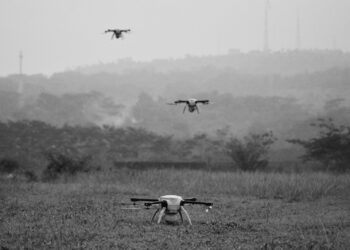
The frontlines have remained static for months. While both sides continue attacking critical infrastructure and facilities, mainly with drones, territorial gains are minimal. This fuels Zelensky’s conviction that Ukraine can still resist and expel the invader, while reinforcing Putin’s belief that he can endure a war of attrition long enough to claim the regions of Luhansk and Donetsk he seeks to annex.
From the start of the conflict, Europe aligned with Ukraine, providing advanced military intelligence mainly through the United Kingdom and the United States — something Putin hadn’t anticipated. This support helped thwart Russia’s initial blitz offensive, leading Zelensky into the illusion of unconditional victory. But once the fronts stabilized, shortages of weapons, logistics, and personnel became clear. War is expensive — and cruel.
Today’s fragile balance offers fertile ground for open dialogue. Russia seeks closure; Ukraine, for now, refuses to concede — though corruption is rising and morale, on both sides, is wearing thin. Western diplomatic efforts collide with the overconfidence of both combatants in their own chances of victory.
One possible path to break the deadlock may involve Trump, without resistance from China, and alongside the European Union, eroding the appeal of continued warfare by making it the least viable option for both populations — a pressure that, sooner or later, will weigh on their leaders. Four years of conflict have taken their toll.
The key condition for any potential ceasefire is confusion over who can claim victory. To escape the abyss, that confusion must be cultivated: both leaders must “receive a medal,” as Trump once handed out in Israel and Egypt, to the applause of both theaters. After all, in Hollywood they know: nothing succeeds like success.
Putin must show the world that “Mother Russia” has strengthened her position without compromise. Zelensky must persuade Ukrainians that the new Ukraine will be more Western, prosperous, and peaceful than ever. Putin knows he is literally fighting for his life; Zelensky, at least, for global credibility — and perhaps more.
It seems reality itself must force their awakening. In this effort, there is no substitute for Trump, backed by Xi Jinping; European leadership, by comparison, is largely theoretical. Trump could represent the support Ukraine needs, while Xi would play the role of perceived neutral guarantor — a “friend” to Russia.
Guido Stein is a professor in the Managing People in Organizations Department and director of the Negotiation Unit at IESE Business School. Marco Jodar is a captain in the Spanish air force.